
Supporting Motor Development the Right Way
Motor skills help children participate in everyday life, from getting across a room to turning a page or carrying a cup. Play offers many chances to practise those movements without turning childhood into an exercise programme. For children ages one to five, useful activities depend on current abilities, interests, and access needs rather than age alone. This guide explains how to choose manageable challenges, adapt familiar materials, and recognise when individual advice would be helpful. Start with what your child already enjoys doing. A small change to a familiar game is often easier to introduce than a completely new task with several instructions.
What is the difference between gross and fine motor skills?
Gross motor skills involve larger body movements, while fine motor skills involve smaller, more precise movements of the hands and fingers. Walking across a room, reaching upward, and balancing while standing are examples of larger movements. Turning a sturdy book page or placing a block on another block involves more precise control. In everyday play, the two often work together: a child carries a basket, steadies it, and takes out a toy. You do not need to separate every activity into a particular category. Instead, notice whether your child has comfortable opportunities to move their body and manipulate objects. Choose materials they can manage safely, and adapt positioning when needed. Progress can look like greater ease or participation in a familiar activity, not only the arrival of a new milestone.
Which movement games can families try at home?
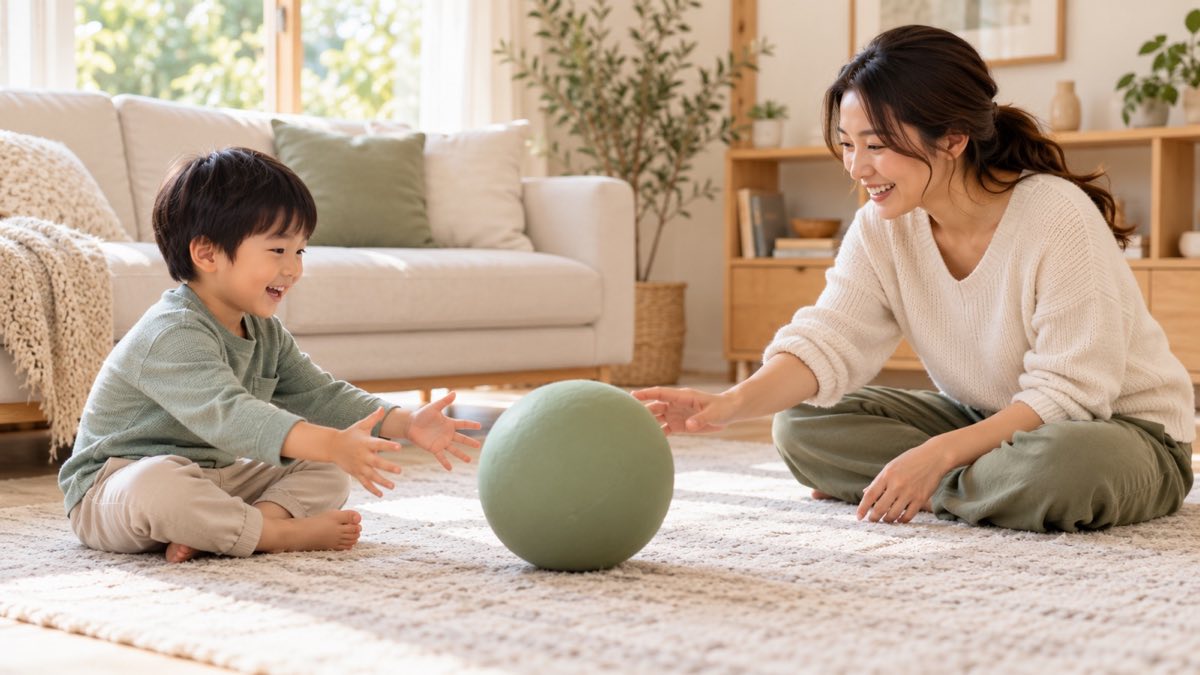
Families can offer movement practice through simple games that match the child's present abilities and the available space. Roll a large soft ball back and forth, place large toys at comfortable reaching distances, or invite a child who walks independently to follow a clear route between floor markers. Keep the floor uncluttered and avoid unstable furniture or raised surfaces. Demonstrate once, then give your child time to decide how to participate. A seated version of a reaching or ball game can be equally meaningful for a child who needs that position. Change one feature at a time, such as the distance between players. If the movement becomes awkward, tiring, or uncomfortable, simplify the activity or stop. There is no need to turn a playful invitation into a compulsory sequence of repetitions.
How can play support hand and finger coordination?
Hand and finger coordination can be practised through manageable tasks such as stacking large blocks, turning thick pages, and placing large objects into a wide container. Offer a stable surface and materials that your child can grasp without struggling continuously. For an older preschooler, drawing with suitable crayons or using age-appropriate safety scissors with supervision may offer another kind of challenge. Follow product age guidance and keep small pieces away from children who mouth objects. You might make a pretend delivery game: put a large toy into a box, close the easy lid, and carry it to a customer. That sequence gives hand movements a clear purpose. Let your child use the hand or method that feels natural rather than forcing a particular grip or hand preference during ordinary play.
How do you choose a challenge that is neither too easy nor too hard?
A useful play challenge allows your child to participate successfully while trying something slightly less familiar. Begin with a task they already manage, then alter one part. For a child stacking two large blocks, offer another block rather than immediately introducing a complicated model to copy. Watch the response: curiosity and repeated attempts suggest engagement, while persistent frustration or fatigue may signal that the task needs adjustment. Offer the smallest practical help, such as holding a container steady, before taking over. Describe the effort specifically: “You moved the box closer so you could reach.” Avoid comparing performance with siblings or online videos. A child can also choose an easier activity simply because it is enjoyable. Play does not need to become harder every time to remain worthwhile or meaningful.
When should parents seek advice about motor development?
Seek professional advice when you are concerned about your child's movement, especially if they lose a skill, experience pain, or have persistent difficulty joining everyday activities. Describe what you observe rather than trying to identify a diagnosis yourself. Useful examples include difficulty using one side, frequent discomfort during play, or a change in how a familiar task is performed. A health professional can consider development alongside medical history and the child's environment. Bring questions about activities you can adapt safely at home. Do not wait for a toy or a practice routine to resolve a concern that deserves assessment. Meanwhile, continue offering comfortable, enjoyable participation within your child's abilities. The aim of support is access to everyday experiences, not pressure to match another child's pace or complete a predetermined set of exercises.
Ready to Support Your Child's Development?
Explore our expert-designed kits tailored to your child's age and developmental stage.
Browse Kits