
Why Sensory Play Matters at Age 2
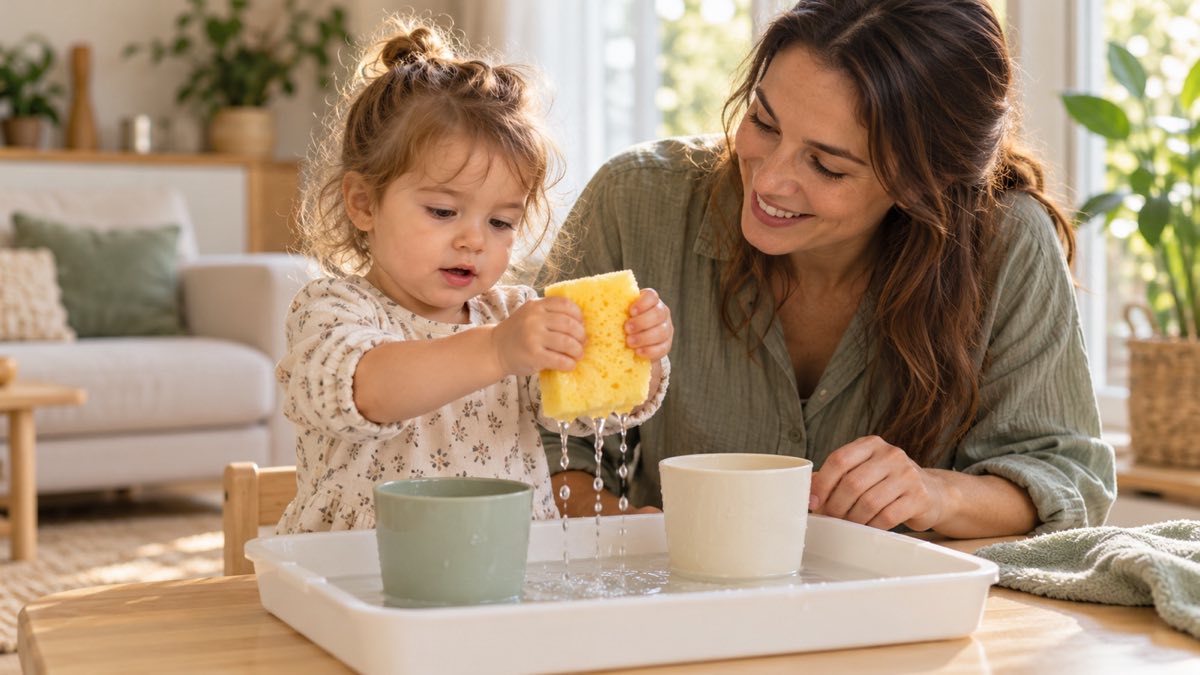
Sensory play gives two-year-olds opportunities to explore textures, sounds, movement, and everyday materials through hands-on activity. A child squeezing a damp sponge can notice what changes, repeat an action, and share that discovery with an adult. The value lies in the exploration and interaction, rather than an elaborate tray or a promise to accelerate brain development. This guide explains how to offer manageable sensory experiences at home, support communication during play, and respond when a child prefers to watch. Start with familiar materials and one simple invitation. Your child's interest, comfort, and safety should shape what happens next.
What does sensory play help a two-year-old practise?
Sensory play lets a two-year-old practise observing, comparing, moving, and communicating while exploring materials. For example, squeezing a wet washcloth and then a dry one creates an immediate comparison: one releases water, while the other does not. A child can repeat the action and notice the difference without needing a formal explanation. Pouring between large cups also invites hand coordination and simple words such as full, empty, more, and spill. These are opportunities to practise skills, not evidence that a particular activity guarantees developmental progress. Try sitting alongside your child and describing one discovery before pausing. They may respond with a look, a gesture, a sound, or a word. Each response gives you something meaningful to share together during the next turn.
Which sensory activities are suitable for home play?
Simple, supervised activities with age-appropriate materials are a useful starting point for sensory play at home. Offer large washable textured toys, sturdy fabric squares without loose threads, or a damp cloth for wiping a tray. For water play, use a small amount in a shallow container and stay within arm's reach throughout; empty it immediately afterward. Avoid water beads and small loose fillers that could be swallowed. Check labels, allergies, and damaged parts before beginning. One example is a toy-washing station with two large cups and a washcloth. Your toddler might wash, squeeze, transfer, or simply watch the water move. There is no required sequence. Keep the setup small enough that you can supervise comfortably and clear it away without turning cleanup into a major project.
How can parents support language during sensory play?
Parents can support communication by describing what their child is already noticing, then leaving time for a response. During a sponge activity, try a short comment such as “The sponge is dripping” instead of asking several questions in a row. If your child says “wet,” you might add “Yes, a wet sponge.” Match your language to what they understand and accept gestures as meaningful communication. You can also offer a practical choice: “Big cup or small cup?” Let them point rather than requiring a spoken answer before continuing. The activity remains play, not a vocabulary test. Repeating a few useful words across several sessions creates familiar opportunities to participate. If your toddler becomes absorbed in silent exploration, stay available without narrating every movement or interrupting their concentration.
What if a toddler dislikes messy textures?
A toddler who dislikes messy textures can participate through watching, using a tool, or choosing a different material. Sensory play does not require touching something uncomfortable. Offer a large spoon to move a material, keep a cloth nearby, and make it easy to stop. You might begin with familiar dry fabric rather than introducing a wet or sticky surface. Show what you are doing once and let your child decide whether to join. Avoid holding their hands in a substance or treating reluctance as misbehaviour. Preferences alone do not establish a diagnosis or mean a child needs more stimulation. If reactions regularly interfere with eating, dressing, washing, or family activities, discuss those specific difficulties with a qualified health professional who can consider your child's wider needs.
How can sensory play become an easy daily habit?
Sensory play fits most easily into family life when it is a small invitation rather than a timed lesson. Choose a moment when your toddler is comfortable and you can stay nearby. Set out one familiar activity, notice whether they engage, and finish when they signal that they are done. You do not need a special daily quota or an increasingly complicated setup. Repeating yesterday's toy-washing game can be worthwhile if your child still enjoys it. Keep a note of practical preferences: a towel under the tray, fewer materials, or a quieter room. Those observations help you adapt the next invitation. Over a week, aim to offer varied opportunities for conversation, movement, rest, and play, with sensory exploration as one enjoyable part of that broader routine.
Ready to Support Your Child's Development?
Explore our expert-designed kits tailored to your child's age and developmental stage.
Browse Kits