
Navigating Sibling Play: Conflict, Cooperation, and Growth
Sibling play can move quickly from shared laughter to disagreement over a single toy. Young children have different interests, communication skills, and tolerance for waiting, so cooperation often needs adult support. The goal is not to eliminate every disagreement or make siblings play together all the time. It is to create workable opportunities for shared enjoyment while protecting each child's space and safety. This guide offers practical ways to arrange play, respond to conflict, and help children reconnect afterward. Adapt the examples to your children's ages and abilities, especially when a younger child could reach materials that are safe only for an older sibling.
Why do siblings argue during play?
Siblings may argue during play because they want the same object, have different plans, or need help communicating and waiting. A younger child may knock over a construction without understanding the older child's intention. An older child may expect a game to follow rules the younger child cannot yet manage. These differences do not mean the relationship is failing, but they do mean adults should offer realistic support. Describe the immediate problem without assigning fixed roles such as the selfish one or the troublesome one. You might say, “You both want the truck, and there is one truck.” That gives everyone a shared starting point. Also consider hunger, tiredness, noise, and crowded space. Adjusting the situation may be more useful than repeatedly telling children to be nicer to each other.
How can parents set up play to reduce avoidable conflict?
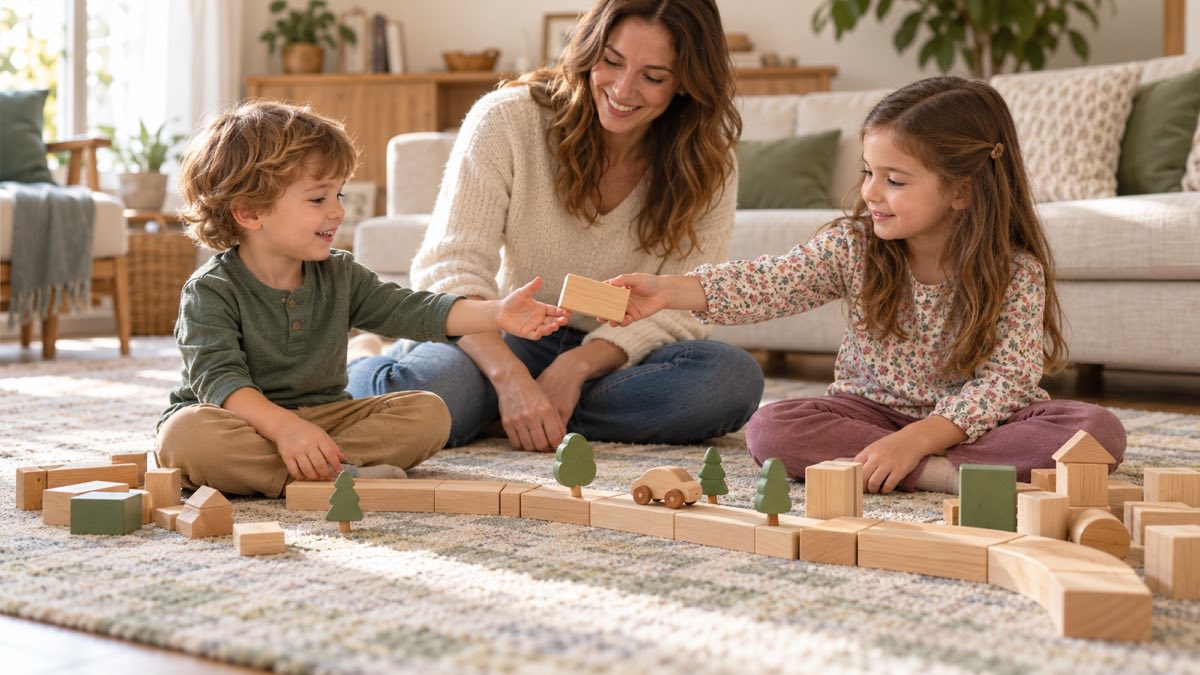
Parents can reduce avoidable conflict by giving children enough space, choosing compatible activities, and protecting possessions that are not available for sharing. Before a joint activity, let each child put away a special item they want to keep private. For popular materials, provide similar options where practical, such as separate piles of large blocks or two drawing spaces. Shared play can begin with parallel activity rather than one complicated cooperative project. Children might build separate garages beside the same road. Keep small parts used by an older sibling out of a younger child's reach, and plan supervision accordingly. Explain a few clear boundaries before starting, including what to do if someone wants help. A thoughtful setup cannot prevent every disagreement, but it can remove repeated obstacles that make the same argument likely.
When should an adult step in during a disagreement?
An adult should step in when play becomes unsafe, a child is being intimidated, or the children cannot manage the disagreement with their current skills. Stop hitting, biting, or dangerous grabbing calmly and separate children when needed. Attend to the child who needs immediate comfort or care before discussing solutions. You do not have to wait for physical harm if one child is distressed or repeatedly overwhelmed. For a smaller disagreement, stay nearby and offer brief support: “Tell your brother you are still using it.” Help younger children with words or gestures rather than expecting independent negotiation. Avoid a lengthy investigation while everyone is upset. Once they are calmer, describe the problem and offer a workable next step. Adult support is part of learning to play together, not evidence that the children have failed.
What helps siblings practise cooperation and taking turns?
Siblings can practise cooperation through short activities with clear, manageable roles and adult help when needed. One child might place large blocks while another carries them to the building area. They can switch roles if both want to, or continue with separate contributions. For a shared toy, agree on a practical turn arrangement before conflict escalates; a visible timer may help some children, while others need adult guidance through the exchange. Do not assume identical turn lengths are always the only fair solution. Explain the arrangement in simple terms and consider both children's needs. Notice specific cooperative actions, such as making space or offering a spare piece, without comparing siblings. End the activity while it is still enjoyable when possible. Brief successful experiences can provide a more useful starting point than a long, increasingly strained game.
How can parents support repair after sibling conflict?
Parents can support repair by helping children understand what happened and choose a concrete way to put something right once they are calm. If a tower was knocked over, an offer to help rebuild may be more meaningful than a forced apology. The affected child can also choose space rather than immediate shared play. Name the boundary and the alternative: “Grabbing hurt. Next time, ask for help with a turn.” Keep the conversation brief enough for both children to follow. Avoid requiring hugs or presenting one child as responsible for keeping the other happy. Repeated intimidation, injury, or distress calls for closer supervision and professional guidance when needed. Healthy sibling relationships include time apart as well as time together. Repair is an ongoing practice of safety, respect, and supported problem-solving, not an obligation to feel friendly immediately.
Ready to Support Your Child's Development?
Explore our expert-designed kits tailored to your child's age and developmental stage.
Browse Kits